sabato 15 marzo 2014

Fisica: Un trattato del 1200 parla di Multiverso? - Physics: A treatise in 1200 speaks of the Multiverse?

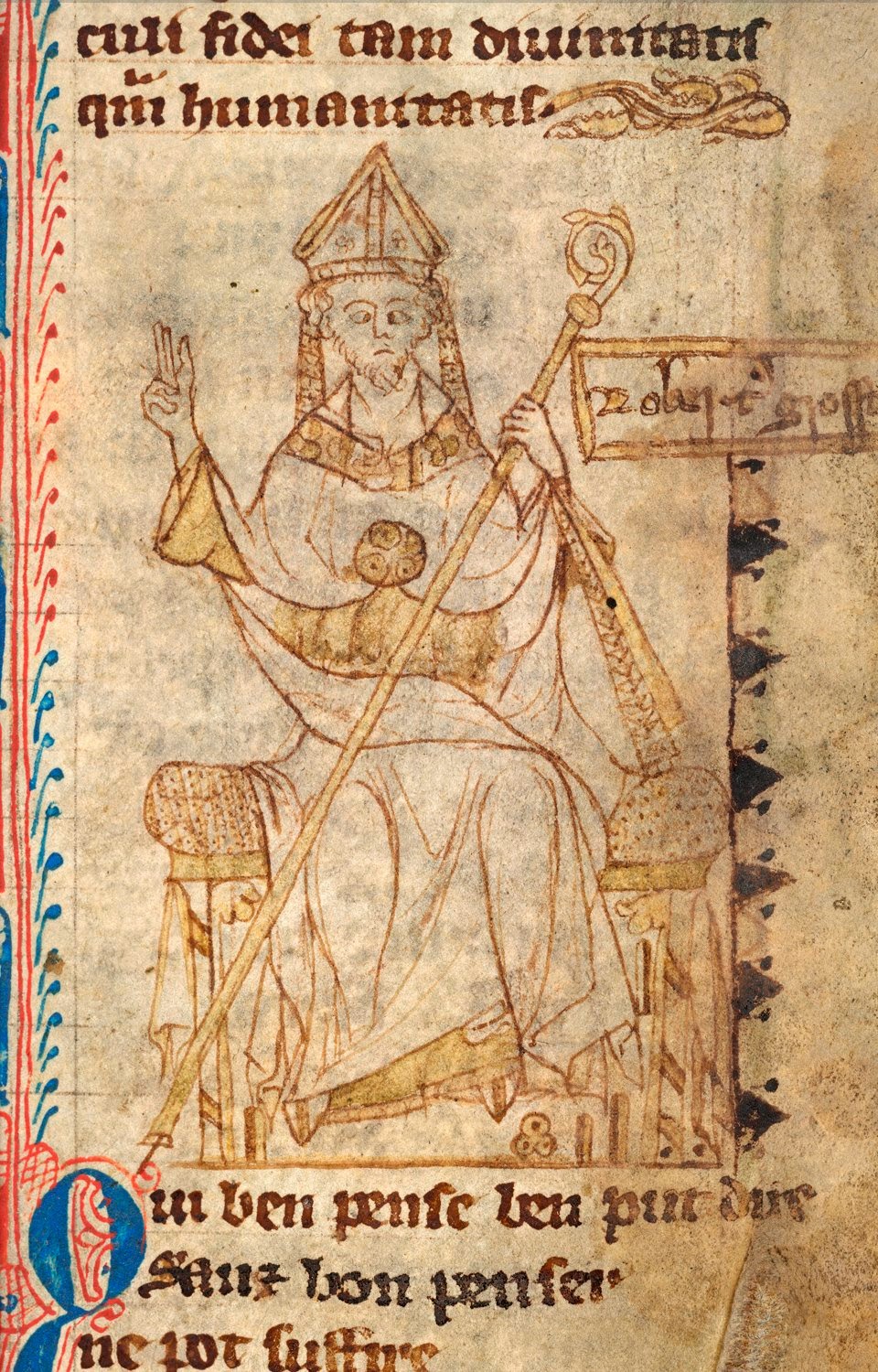
Tom McLeish , un fisico presso la Durham University, Regno Unito, ed i suoi colleghi hanno applicato la matematica ad un trattato del 1225 sulla luce, chiamato, "De Luce" , scritto dal filosofo medievale Roberto Grossatesta . Il testo è stato tradotto in equazioni moderne e i fisici sono rimasti sorpresi nello scoprire che il filosofo poneva questioni cosmologiche ed implicazioni filosofiche del tutto moderne e attuali.
"Abbiamo cercato di scrivere in matematica quello che ha detto in parole latine", dice McLeish. Grossatesta aveva studiato le opere di Aristotele che spiegavano il moto delle stelle. In "De Luce" , Grossatesta ha proposto che l'universo concentrico sia iniziato con un lampo di luce, che ha spinto tutto verso l'esterno da un piccolo punto in una grande sfera, definisce inoltre lo "stato perfetto", uno stato in cui la coppia luce-materia ha raggiunto una densità minima in cui ha cominciato ad emettere un nuovo tipo di luce definita dal filosofo "Lumen". Questo processo molto complesso spiegato da Grossatesta, analizzato dai fisici e riprodotto al computer , genera un modello matematico  analogo al modo in cui i cosmologi moderni usano osservazioni della radiazione cosmica di fondo , la radiazione residua del big bang. Secondo il cosmologo Avi Loeb del Centro Harvard-Smithsonian per l'Astrofisica di Cambridge, il modello cosmologico di Grossatesta  è ben definito. All'insaputa del filosofo medioevale, il suo universo predice una delle possibilità più sconcertanti in cosmologia: il multiverso. I modelli attuali sono d'accordo con le osservazioni solo se determinati parametri assumono particolari valori, gli scienziati chiamano questo il problema messa a punto e un modo per risolverlo è quello  che ci deve essere un numero infinito di universi in cui sono possibili tutti i risultati. Allo stesso modo "l'universo" di Grossatesta , dipende dal suo stato iniziale,cambiando il rapporto nella coppia luce-materia si cambia il numero di sfere concentriche che contiene.
--English version--
Tom McLeish , a physicist at Durham University , UK, and his colleagues have applied mathematics to a 1225 treatise on light, called " De Luce " , written by the medieval philosopher Robert Grossatesta. The text has been translated into equations and modern physicists were surprised to find that the cosmological questions posed philosopher and the philosophical implications of all modern and current.
"We tried to write in mathematics what he said in the Latin words ," said McLeish . Grossatesta had studied the works of Aristotele, who explained the motion of the stars. In " De Luce " Grossatesta has proposed that the universe is concentric started with a flash of light , which pushed everything to the outside by a small point in a big ball , also defines the " perfect state ," a state in when the couple light-matter density has reached a minimum when he began to issue a new type of light as defined by the philosopher " Lumen " . This very complex process explained by Grossatesta , analyzed by physicists and play on the computer, generates a mathematical model similar to the way in which modern cosmologists use observations of the cosmic microwave background , the radiation left over from the big bang. According to the cosmologist Avi Loeb of the Harvard-Smithsonian Center for Astrophysics in Cambridge, the cosmological model of Grossatesta is well defined . Unbeknownst to the medieval philosopher , his universe predicts a possibility of the most baffling in cosmology : the multiverse. Current models agree with the observations only if certain parameters take particular values ​​, scientists call this the problem setup and a way to resolve it is that there must be an infinite number of universes in which all results are possible . Similarly the " universe " of Grossatesta , depends on its initial state, changing the relationship in the couple light-matter alters the number of concentric spheres it contains.


venerdì 14 marzo 2014

Materia oscura: Estinzione dei dinosauri? - Dark Matter: Dinosaur Extinction?


Secondo i fisici teorici Lisa Randall e Matthew Reece, della Harvard University di Cambridge, sarebbe una ipotesi plausibile che l'estinzione dei dinosauri sia la conseguenza di uno sciame di comete attratte dal nostro sole,nel suo pellegrinaggio intorno alla galassia(via lattea). In particolare l'ipotesi è che, il muoversi attraverso la galassia del sole, lo abbia condotto in zone dove la presenza di materia oscura, definita  'disco oscuro', abbia provocato una spinta gravitazionale e attratto delle  comete nella nube di Oort. Effettivamente a riprova di questo potrebbe esserci il fatto che i modelli fino ad ora studiati non giustificano la presenza di una forza di gravità sufficiente all'effetto descritto. Secondo i ricercatori questo fenomeno potrebbe essere ciclico con una periodicità di circa 35 milioni di anni come descritto nel Physical Review Letters . Generalmente si ritiene che la materia oscura non interagisca molto con la materia ordinaria, ma i fisici ritengono che una piccola frazione di materia oscura potrebbe comportarsi in modo molto diverso. L'anno scorso, hanno sviluppato una teoria sulla "materia oscura dissipativa" nel tentativo di spiegare segnali di materia oscura provenienti dal centro della galassia come  osservato dal Fermi Gamma-ray Space Telescope. Secondo il loro modello, questo disco oscuro avrebbe uno spessore di circa 35 anni luce(10 parsec) , con una densità di circa 1 massa solare per metro quadrato per anno luce (10 masse solari al quadrato Parsec), quindi sarebbe sufficientemente  denso da far scattare la  pioggia di comete periodiche.
- English Version -
According to theoretical physicists Lisa Randall and Matthew Reece , of Harvard University in Cambridge , would be a plausible hypothesis that the extinction of the dinosaurs is the result of a swarm of comets are attracted by our sun, on his pilgrimage around the galaxy ( Milky Way ) . In particular, the hypothesis is that the moving of the sun through the galaxy , it has resulted in areas where the presence of dark matter , called ' dark disc ' , has caused a gravitational pull, and attracted the comets in the Oort cloud . Indeed, proof of this could be the fact that the models studied so far do not justify the presence of a force of sufficient gravity to the effect described . According to the researchers, this phenomenon could be cyclic with a periodicity of about 35 million years , as described in Physical Review Letters. It is generally believed that dark matter does not interact much with normal matter , but physicists believe that a small fraction of dark matter may behave very differently. Last year , they developed a theory of " dissipative dark matter " in an attempt to explain dark matter signals coming from the center of the galaxy as seen by the Fermi Gamma -ray Space Telescope. According to their model , this disk would obscure a thickness of about 35 light years (10 parsecs ) , with a density of about 1 solar mass per square meter for light-year (10 solar masses per square parsec ) , so it would be dense enough to take the rain of periodic comets .

Nasa: Vita Extraterrestre nuove rivelazioni - NASA: Extraterrestrial Life new revelations


Richard  Hoover ha lavorato per la NASA come astrobiologo per 46 anni,è uno scienziato acclamato, nel 1992 è stato premiato inventore dell'anno della NASA. In un'intervista con Lee Spiegel dell' Huffington Post pubblicato il 19 febbraio, Hoover sostiene, che la Nasa ha sistematicamente ignorato la sua ricerca scientifica sui meteoriti,che rivela l'esistenza di vita microbica extraterrestre. Ha scoperto  resti fossili di vita nei meteoriti recuperati dalla Francia nel 1864, in Australia nel 1969 e nello Sri Lanka nel 2012. La sua ricerca ha escluso la possibilità di contaminazione del terreno. Inoltre, Hoover sostiene che nel 2004, il Mars Rover, opportunity ha fotografato quello che sembravano chiaramente i resti fossili  di un crinoide, un animale marino. Tuttavia, invece di esaminare la possibilità che Opportunity avesse fotografato i resti
fossili di un organismo vivente, Hoover ha detto che meno di quattro ore dopo l'assunzione della fotografia, lo strumento per abrasione delle roccie in dotazione ad Opportunity ha ridotto in polvere la terra della zona dove il possibile fossile giaceva. Hoover chiese spigazioni a David McKay, ex capo astrobiologo
 presso il Johnson Space Center, ma non ebbe risposta. Secondo Hoover altri casi si sono verificati nel tempo e quasto andrebbe a suffragare la sua teoria
---ENGLISH VERSION---
Richard Hoover has worked as an astrobiologist at NASA for 46 years , is an acclaimed scientist , in 1992 he was awarded the NASA Inventor of the Year . In an interview with Lee Spiegel of ' Huffington Post published February 19 , Hoover argues that NASA has systematically ignored his scientific research on meteorites , which reveals the existence of extraterrestrial microbial life . He discovered the fossilized remains of life in meteorites recovered by France in 1864 , Australia in 1969 and Sri Lanka in 2012. His research has ruled out the possibility of contamination of the soil. In addition, Hoover claims that in 2004, the Mars Rover , opportunity has photographed what appeared to clear the fossilized remains of a crinoid , a marine animal . However, rather than consider the possibility that Opportunity had photographed the remains
Fossils of a living organism, Hoover said that less than four hours after taking the photograph , the tool supplied by abrasion of rocks Opportunity has reduced to dust in the ground in the area where the fossil was lying as possible . Hoover asked spigazioni David McKay, former chief astrobiologist
 at the Johnson Space Center, but there was no answer . According to Hoover other cases have occurred over time and trick that would go to support its theory

Canada:Fuga Radioattiva - Canada radioactive leak


I Vigili del fuoco di Halifax hanno confermato la presenza di una fuga radioattiva al Container Terminal Fairview nel nord della città. Diverse squadre di emergenza sono sul posto tra cui un team N.B.C.R. La fuga è iniziata quando un contenitore che doveva essere caricato sul ponte del Atlantic Companion è caduto. L'incidente è avvenuto intorno 22:00 Giovedi. I vigili del fuoco sono andati a verificare la radioattività al terminal Ceres. La prima squadra non ha trovato nulla, ma una seconda verifica ha rilevato un valore superiore ai livelli normali di radioattività. L'Atlantic Companion è una nave svedese di proprietà dell'Atlantic Container Line ACL.
                             -English Version-
Halifax Fire has confirmed there is a radioactive leak at the Fairview Container Terminal in the city's north end. Several emergency crews are on the scene including a HAZMAT team. The leak began when a container being loaded onto the deck of the Atlantic Companion dropped. The incident happened around 10 p.m. Thursday. The fire department went to test for radioactivity at the Ceres terminal. The first team found nothing, but a second test picked up higher than normal levels of radioactivity. The Atlantic Companion is a Swedish-built ship owned by Atlantic Container Line ACL.

giovedì 13 marzo 2014

Scienza: Acqua nel mantello terrestre! - Science: Water in Earth's mantle !


Ricercatori canadesi dicono che  l'analisi di un raro minerale il "ringwoodite" potrebbe rivelare la presenza del del più vasto serbatoio di acqua del pianeta, che si troverebbe a circa 250-375 km sotto la superficie terrestre, nella zona definita mantello. Secondo la rivista "Nature" il minerale proverrebbe dalla cosiddetta zona di transizione inserita tra gli strati superiore e inferiore del mantello terrestre. Il "ringwoodite", noto per legarsi all'acqua ed essere un indicatore di questa, fino ad oggi non era mai stato trovato sul pianeta Terra, ma solo nei residui di comete o meteoriti caduti sul pianeta. Anni di analisi, utilizzando anche la spettroscopia e diffrazione di raggi X, sono stati necessari in laboratori specializzati per confermare di aver trovato ufficialmente il ringwoodite.Gli scienziati hanno dibattuto per decenni sul fatto che la zona di transizione ha acqua, nessuno, però, ha abbracciato la fantasia di Verne di un mare sotterraneo con una costa rocciosa, chissà che l'ennesima premonizione di Verne non si sia avverata.....

-----English version--------
Canadian researchers say that the analysis of a rare mineral the " ringwoodite " could reveal the presence of the largest reservoir of water on the planet, that would be about 250-375 km below the earth's surface, in the area defined mantle. According to the magazine "Nature" the ore would be from the so-called transition zone sandwiched between the top and bottom layers of the earth's mantle . The " ringwoodite " , known to bind to water and be an indicator of this , up until now had never been found on the planet Earth, but only in the residues of comets or meteorites fallen on the planet. Years of analysis , also using spectroscopy and X-ray diffraction , were needed in specialized laboratories to confirm officially that he had found the ringwoodite.Gli scientists have debated for decades that the transition zone has water , no one , however, has Verne embraced the imagination of a subterranean sea with a rocky shore , who knows that yet another premonition of Verne has not come true .....